The Enduring Power of Cure Wounds 5E: A Foundational Healing Spell
In the vast, perilous realms of Dungeons & Dragons 5th Edition, adventurers face countless threats, from the bite of a ravenous beast to the arcane blast of a malevolent sorcerer. Amidst this constant danger, the ability to restore vitality to injured allies is nothing short of a lifesaver. When it comes to reliable healing, Cure Wounds 5E stands as one of the most iconic and fundamental spells in a spellcaster's repertoire. Often the first healing spell many players encounter, it epitomizes the vital role of support in any adventuring party.
But is this staple spell truly a blessing that consistently turns the tide, or can it sometimes feel like a burden on precious resources? This article will delve deep into the mechanics, strategic implications, and thematic resonance of Cure Wounds in D&D 5e, offering insights to help players and Dungeon Masters alike understand its true value and when best to leverage its restorative power.
At its core, Cure Wounds is a 1st-level Abjuration spell available to a wide array of classes, including Artificers, Bards, Clerics, Druids, Paladins, and Rangers. This broad access underscores its universal utility, making it a common sight in many party compositions. When cast, the spell allows the caster to channel a surge of positive energy into a creature they touch, knitting together wounds and invigorating their spirit. This direct, hands-on approach to healing not only restores hit points but also reinforces the caster's role as a beacon of hope and a protector of life, an emotional impact often as significant as the physical rejuvenation.
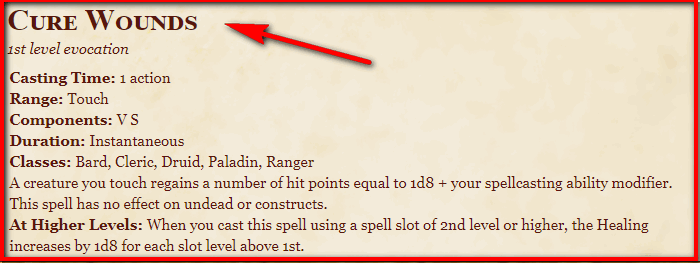
The spell's mechanics are straightforward: it requires an Action to cast, has a Range of touch, and utilizes Verbal and Somatic components. Its Duration is instantaneous, meaning the healing takes effect immediately and requires no concentration. Crucially, the target regains hit points equal to 1d8 plus your spellcasting ability modifier. It's important to note that while some sources might suggest 2d8, the official Player's Handbook specifies 1d8. Furthermore, this positive energy spell has no effect on undead creatures or constructs, a critical detail for specific campaign settings or encounters.
Unpacking the Mechanics: How Cure Wounds 5E Works in Detail
To truly appreciate Cure Wounds 5E, it's essential to dissect its specific components and how they influence its application at the table.
Casting Time: The Action Economy
Requiring an Action to cast is perhaps the most significant strategic consideration for Cure Wounds, especially during combat. In D&D 5e, an action is a precious resource. Using your action to heal means you aren't using it to attack, cast a damaging spell, or perform a crucial maneuver. This often leads to a tactical dilemma: heal a wounded ally now, or try to reduce the threat causing the damage? This is a key differentiator from spells like *Healing Word*, which only consumes a bonus action, allowing the caster to still use their main action for other purposes. The choice between these two spells is a common subject of discussion, as explored further in Cure Wounds 5E - Article 2.
Range: The Touch Requirement
The spell's Touch range means the caster must be adjacent to the creature they wish to heal. While this is rarely an issue outside of combat, it introduces significant tactical challenges mid-battle. A frontline cleric might find themselves in the thick of the fight, making touch range simple. However, a backline Bard or Ranger might need to expose themselves to danger, spending movement to reach a fallen comrade, potentially drawing unwanted attention or triggering opportunity attacks. This often makes Cure Wounds less flexible than ranged healing options when allies are scattered or engaged in different areas of a battlefield.
Components: Verbal and Somatic
Cure Wounds requires both Verbal (speaking mystic words) and Somatic (gesturing with a free hand) components. This means a caster cannot cast the spell if they are silenced, restrained, or have both hands full. While less impactful than the action or range, these details can occasionally be relevant in niche situations, such as grappling, being tied up, or encountering a Silence spell.
Healing Potential: Scaling with Higher-Level Slots
The base healing of 1d8 + spellcasting ability modifier is solid for a 1st-level spell. For example, a Cleric with a Wisdom score of 16 (+3 modifier) would heal 1d8 + 3 hit points, averaging 7.5 HP. However, Cure Wounds also scales effectively with higher-level spell slots. When cast using a spell slot of 2nd level or higher, the healing increases by 1d8 for each slot level above 1st. This means a 2nd-level slot heals 2d8 + modifier, a 3rd-level slot heals 3d8 + modifier, and so on. This upcasting potential ensures that Cure Wounds remains a viable, powerful healing option even at higher tiers of play, capable of delivering substantial bursts of health when needed most.
No Effect on Undead or Constructs
This limitation, while specific, is important. Positive energy-based healing spells generally fail to affect creatures animated by negative energy (undead) or those that lack biological vitality (constructs). In campaigns heavily featuring these enemy types, a caster might find their primary healing spell ineffective on certain allies who might be temporarily transformed or in unusual states, reinforcing the need for alternative strategies or spells.
Blessing or Burden? Strategic Considerations for Cure Wounds 5E
The ongoing debate over whether Cure Wounds is a blessing or a burden for an adventuring party highlights its nuanced role in D&D 5e. Understanding its strengths and weaknesses is key to mastering its use.
The Blessings of Cure Wounds
- Reliable Burst Healing: When an ally is on the brink of falling unconscious, Cure Wounds provides a solid, immediate injection of hit points. Upcast at higher levels, it can restore a significant portion of an ally's health, pulling them back from the brink.
- Foundational & Accessible: As a 1st-level spell available to many classes, it's easily obtained and mastered, making it a universal healing tool from early levels.
- Emotional Impact & Thematic Resonance: Beyond numbers, the act of a character touching an ally and visibly mending their wounds has a powerful narrative and emotional weight. It embodies hope, compassion, and the bond between party members. For a Cleric, Paladin, or Druid, it reinforces their thematic identity as protectors and conduits of restorative energy.
- Out-of-Combat Efficiency: After a skirmish, when the pressure of the action economy is gone, Cure Wounds shines. It's an excellent way to patch up the party without expending more valuable resources like hit dice, ensuring they are fighting fit for the next encounter.
The Burden and Its Limitations
- Action Cost in Combat: As discussed, sacrificing your main action to heal can feel like a sub-optimal move when faced with active threats. Often, reducing the number of enemies or their damage output through offensive spells or attacks can prevent more damage than a single Cure Wounds spell can restore.
- Spell Slot Economy: Healing in D&D 5e is generally less efficient than damage. A 1st-level spell slot used for Cure Wounds might prevent some damage, but an offensive 1st-level spell could end an encounter faster, ultimately saving more hit points in the long run by eliminating sources of harm.
- Touch Range Restrictions: Needing to be adjacent to your target can be dangerous or impossible in certain combat scenarios, especially for ranged spellcasters.
- Better Alternatives Exist: For in-combat healing, *Healing Word* (bonus action, ranged) is often preferred for its action efficiency, even if it heals less. For massive healing out of combat, *Prayer of Healing* (longer cast time, heals multiple targets) or simply a short rest with hit dice might be more efficient.
Ultimately, Cure Wounds isn't inherently a blessing or a burden; it's a tool. Its effectiveness is determined by the situation and the player's strategic choices. Knowing when to deploy it, and when to opt for an alternative, is the mark of an experienced player.
Maximizing Your Healing: Tips for Using Cure Wounds 5E Effectively
To truly master Cure Wounds 5E, consider these practical tips and insights:
1. Know Your Class's Strengths
While many classes get Cure Wounds, their implementation differs. A Cleric with the Life Domain subclass makes Cure Wounds even more potent thanks to features like *Disciple of Life*, adding 2 + spell level to any healing spell. A Paladin might use it to top off an ally after they've used their Lay on Hands. A Druid might use it after wild shaping, while a Bard uses it as a versatile support option. Understand how your character's unique abilities synergize with the spell.
2. Timing is Everything
The "Yo-Yo Healing" strategy is common: letting an ally drop to 0 hit points (unconscious) and then using a minimal amount of healing (like Cure Wounds with a 1st-level slot) to bring them back up. This is because a creature at 1 HP functions just as effectively as a creature at full HP, but taking an action to heal someone at 50% HP might be less efficient than saving them from death's door. Out of combat, always use Cure Wounds to conserve hit dice or potions for emergencies.
3. Manage Your Spell Slots Wisely
Cure Wounds is great for upcasting for a significant burst, but consider if that high-level slot could be better used for a powerful offensive spell or a crowd-control effect that prevents more damage than healing can restore. Balance your healing needs against the overall tactical situation.
4. Communicate with Your Party
Let your party know you have healing available. Coordinate with other healers if you have them. Understanding who needs healing most, and who is best positioned to deliver it, can prevent wasted actions or spell slots. For more advanced healing strategies, check out Cure Wounds 5E - Article 1.
5. Consider Alternatives
Don't fall into the trap of thinking Cure Wounds is always the best option. Sometimes, a Potion of Healing is more action-efficient for an ally to consume themselves. As mentioned, Healing Word (bonus action, range 60 feet) is often superior in combat for getting an unconscious ally back into the fight without sacrificing your main action. Other spells like Mass Cure Wounds or even simply using a Short Rest might be more appropriate for widespread or sustained healing.
Conclusion
Cure Wounds 5E is undeniably a cornerstone of healing in Dungeons & Dragons. Its accessibility, reliable burst healing, and powerful thematic resonance make it a spell many adventurers rely on. While its action cost and touch range present strategic challenges in the heat of battle, understanding these limitations allows players to use it most effectively. Whether pulling a fighter from the brink of defeat or patching up the party after a grueling encounter, Cure Wounds remains a potent tool in the hands of a skilled spellcaster. By weighing its blessings against its burdens and employing it judiciously, players can ensure this fundamental spell continues to be a source of hope and resilience throughout their epic adventures.